JED Campus
NC State is proud of our strategic partnership with JED Campus, a flagship initiative of The Jed Foundation.
NC State is a JED Campus
JED Campus fosters a collaborative process, building upon existing student mental health and suicide prevention efforts. It offers colleges and universities expert support, evidence-based best practices and data-driven guidance to enhance student mental health and prevent suicide.
Need Support? We’re here to help
JED’s Comprehensive Approach
JED Campus believes in a comprehensive public health approach to promoting mental health and preventing suicide. This evidence-based model is used to assess current campus efforts, identify existing strengths and find areas for improvement.
Develop life skills
Supporting life skills education is valuable in teaching healthy ways to cope with the stress of college life. Some life skills necessary to a student’s well-being include managing friendships and relationships, problem solving, decision making, identifying and managing emotions, healthy living and finding life purpose, meaning and identity.
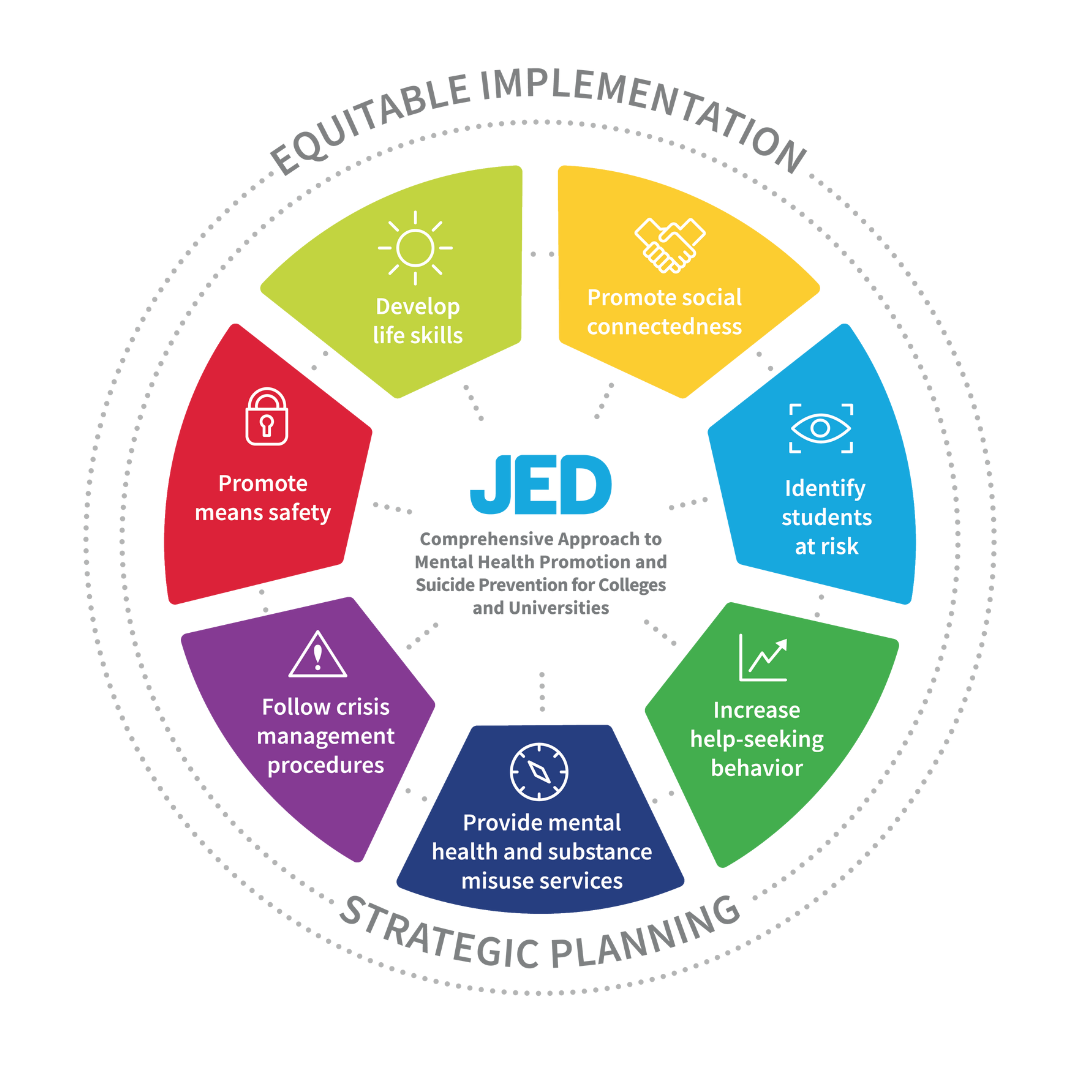
Promote social connectedness
Research has shown that loneliness and isolation are significant risk factors for mental health problems – including suicidal behavior. Therefore, supportive social relationships and feeling connected to campus, family and friends are protective factors that can help lower risk.
Identify students at risk
It is important to take action to identify students at risk for mental health problems and/or suicidal behavior and also to promote emotional health awareness among those who interact with students the most — “gatekeepers” such as residence hall staff, academic advisors, faculty and even fellow students — as it is vital for these people to be able to recognize and refer a student who might be in distress.
Increase help-seeking behavior
Many students who need help may be reluctant or unsure of how to seek it out. Obstacles to seeking help include lack of awareness of mental health services, skepticism about the effectiveness of treatment, prejudices associated with mental illness and uncertainty about costs or insurance coverage. Campuses should engage in a variety of activities designed to increase the likelihood that a student in need will seek help.
Provide mental health and substance misuse services
It is essential to offer accessible, consistent and high-quality mental health services to students. To make mental health and substance use care more comprehensive, it should include strong and flexible services, adequate staffing levels, flexibility in treatment approaches and clinic hours that are reflective of student schedules. Since most college clinics are free, the length of treatment is often limited. Therefore, it is important that campus mental health services assist students in finding off-campus resources that can provide long-term care, if needed.
Follow crisis management procedures
The campus should have access to a well-publicized 24/7 crisis phone and/or chat line either through campus resources or local/national services. There should be a process in place to share information (as legally appropriate) between local ERs and school health and/or counseling services.
Restrict access to potentially lethal means
It has been well established that if the means to self-harm are removed or limited in an environment, it can prevent suicide and even limit accidental deaths. This is called “means restriction.” Limiting students’ access to weapons, poisonous chemicals, rooftops, windows or other high places are all means restriction activities. Each campus should do an environmental scan for potential access to lethal or dangerous means.
Healthy Minds Study
NC State, in collaboration with the JED Campus Initiative conducted the nationally standardized Healthy Minds Study survey. This survey is administered at colleges and universities across the country, and allows NC State to compare its results to national averages with the aim of better understanding how the mental health of our students aligns with trends at other institutions.
Advisory Group
This interdisciplinary group is leading the JED process and implementation on NC State’s campus.
Group Members
Name Title and College/Department/Unit Maria T. Gallardo-Williams Co-Chair, Director of Faculty Development Monica Osburn Co-Chair, Executive Director, Counseling Center and Prevention Services Alicia Lecceardone Associate Dean, College of Textiles Angel Bowers Director, Prevention Services Betsy Lanzen General Counsel, University Legal Charles Clift Assistant Vice Provost, Registration and Records Conner Hartis Campus Police Courtney Hinton Medical Director, Campus Health Services Justine Hollingshead Assistant Vice Chancellor, Office of Student Life and Advocacy Kelly Vance Wellness, Childcare and Perks Coordinator, University Human Resources Kim Nguyen-Dinh Addictive Behaviors Coordinator, Counseling Center Meghan Luzader Director of Residence Life, University Housing Nancy Whelchel Assistant Vice Provost, Institutional Strategy and Analysis Pablo Campos Counselor, Counseling Center Pete Fraccaroli Director of Facilities and Business Operations, University Housing Shannon DuPree Director, Wellness and Recreation Sheri Schwab Vice Provost, Office of Equal Opportunity Tricia Buddin Advisor, Academic Advising
Working Groups
Grouped based on overarching areas of focus.
- Identify and Responding to At-Risk Students
Mental Health Training for Faculty, Staff and Students - Means Safety
- Policies and Procedures
(PRRs, Leave Policies, Tuition Insurance, etc) - Social Connectedness
- Prevention and Substance Misuse
Alcohol and Other Drug Services - Data-Driven Strategic Planning

